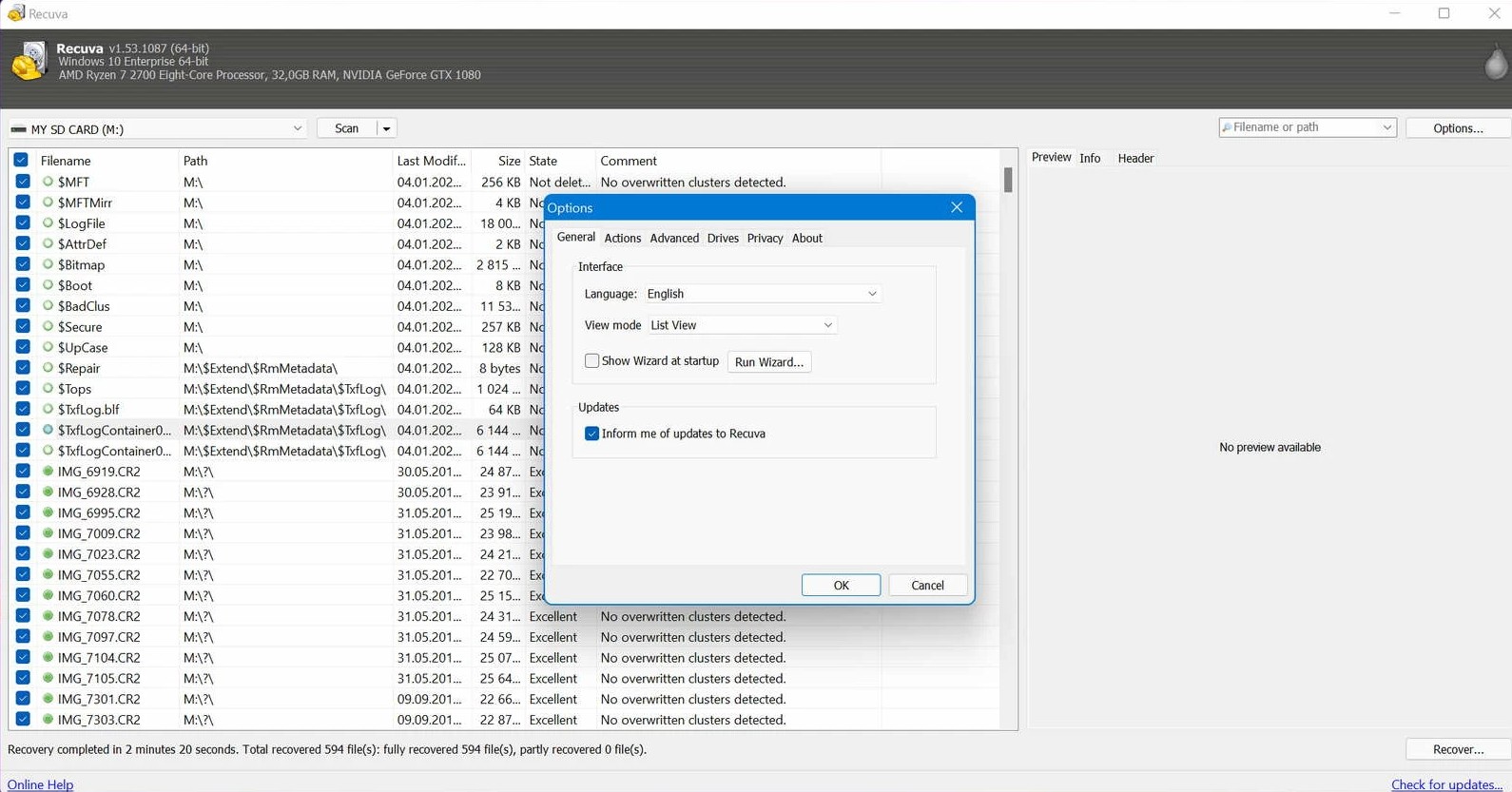
Secure delete, updates, and portable runs under policy
General options are where IT and incident responders meet. Secure overwrite features exist because some deletes should be irreversible on purpose - not because every recovery run needs them. Turn them on only when policy or classification demands it, and never confuse secure delete with "making recovery faster."
Update cadence matters in locked environments. Frozen builds reduce surprise binaries; they also mean you hash and mirror a known installer before the crisis. If your org forbids ad-hoc downloads, stage Recuva (or a portable copy) on an internal file share with checksums published next to the file.
Portable execution can satisfy "no install" rules, but the same recovery rules apply: run from media you trust, scan from read-only posture where possible, and log which build number produced the export. Auditors care about the trail, not the wizard skin.
Combine policy with staging: some orgs require wiping tools after sensitive cases. Know whether your procedure expects a full disk wipe of the USB stick or a documented secure erase of only the export folder - and do not mix personal media with evidence exports.